Skip to content

ENERGY STORAGE SYSTEMS

Safety Testing & Certification

Predict large-scale fire-test outcomes, compare against test measurements, and evaluate alternative design configurations.
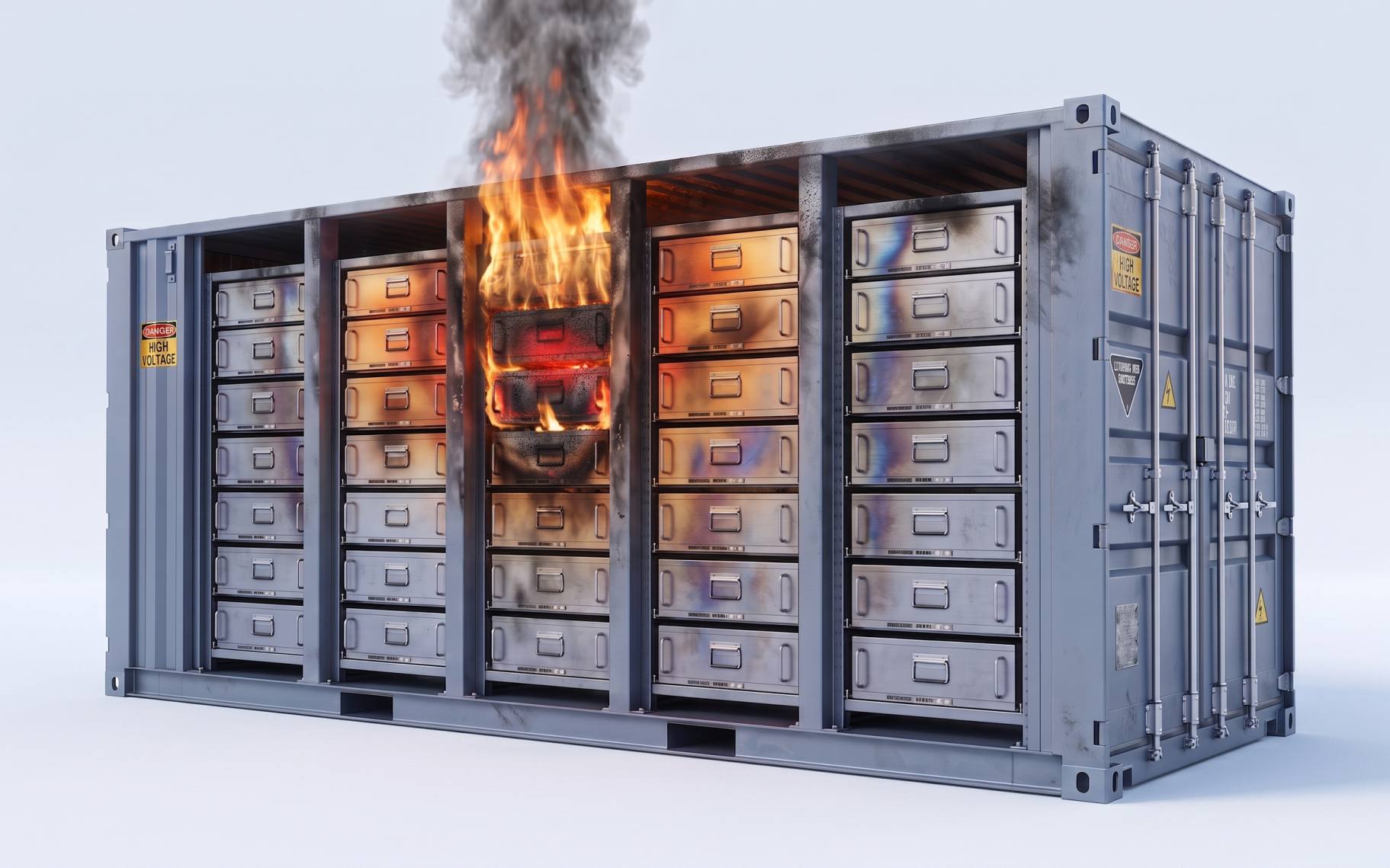
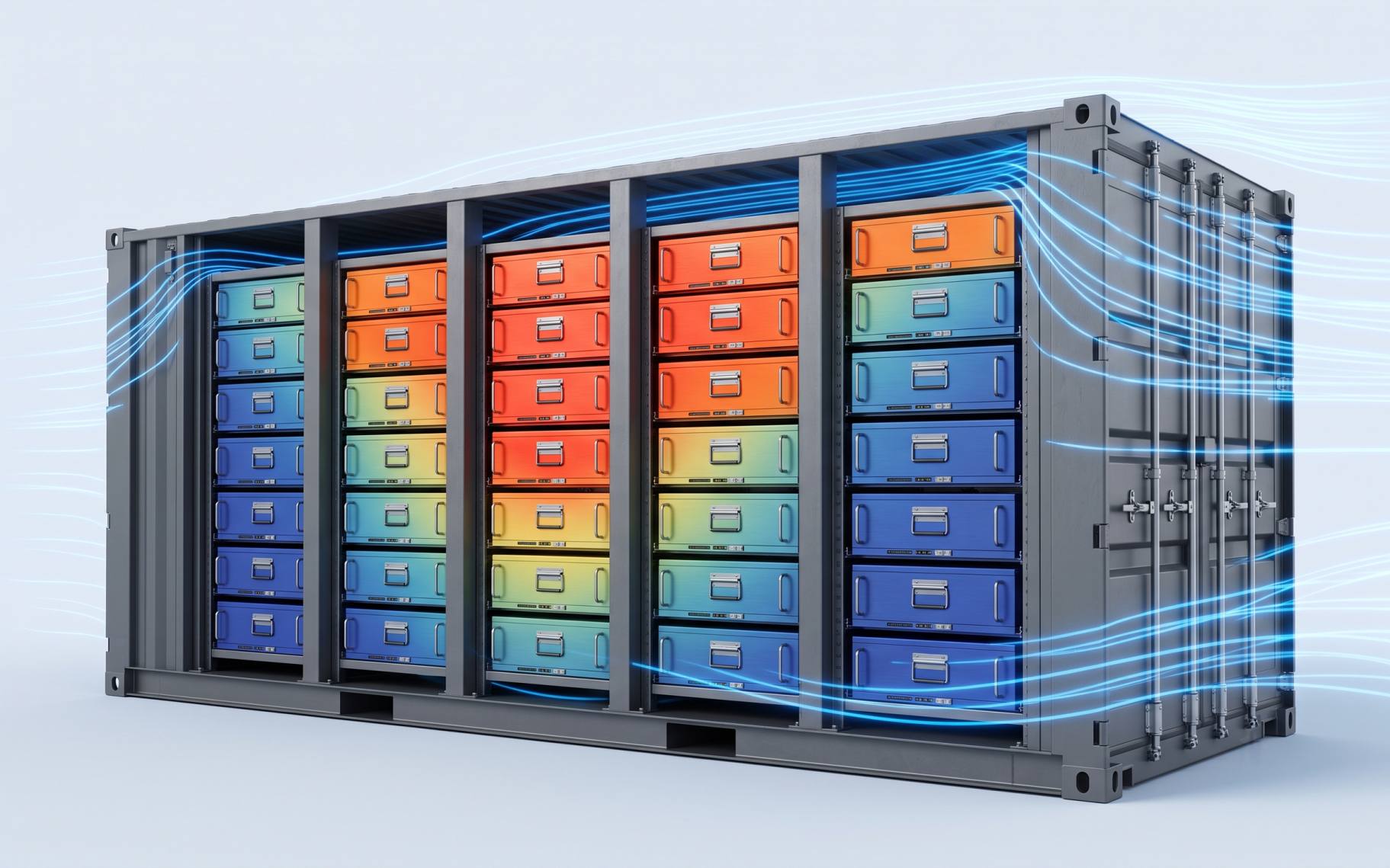
Battery container, fire and dark smoke from the charred centre bay of five, its core glowing red, neighbours lit amber.

From test data to design solutions

  1. Build

    Create a digital twin of your battery energy storage system

  2. Validate

    Establish predictive accuracy against test behavior

  3. Explore

    Evaluate safety events, mitigation strategies, and operating scenarios

  4. Design

    Evaluate alternative configurations and develop safer solutions

Digital Twin
Explore Safety & Design Strategies

  • Temperature
  • Gas
  • Pressure
  • Propagation
  • Airflow
  • Enclosure Type Containerized
  • Internal Layout Multi-rack
  • Initiation Scenario User-defined
  • Thermal Barrier Configurable
  • Ventilation Configurable
  • Fire Suppression Configurable
Run Simulation
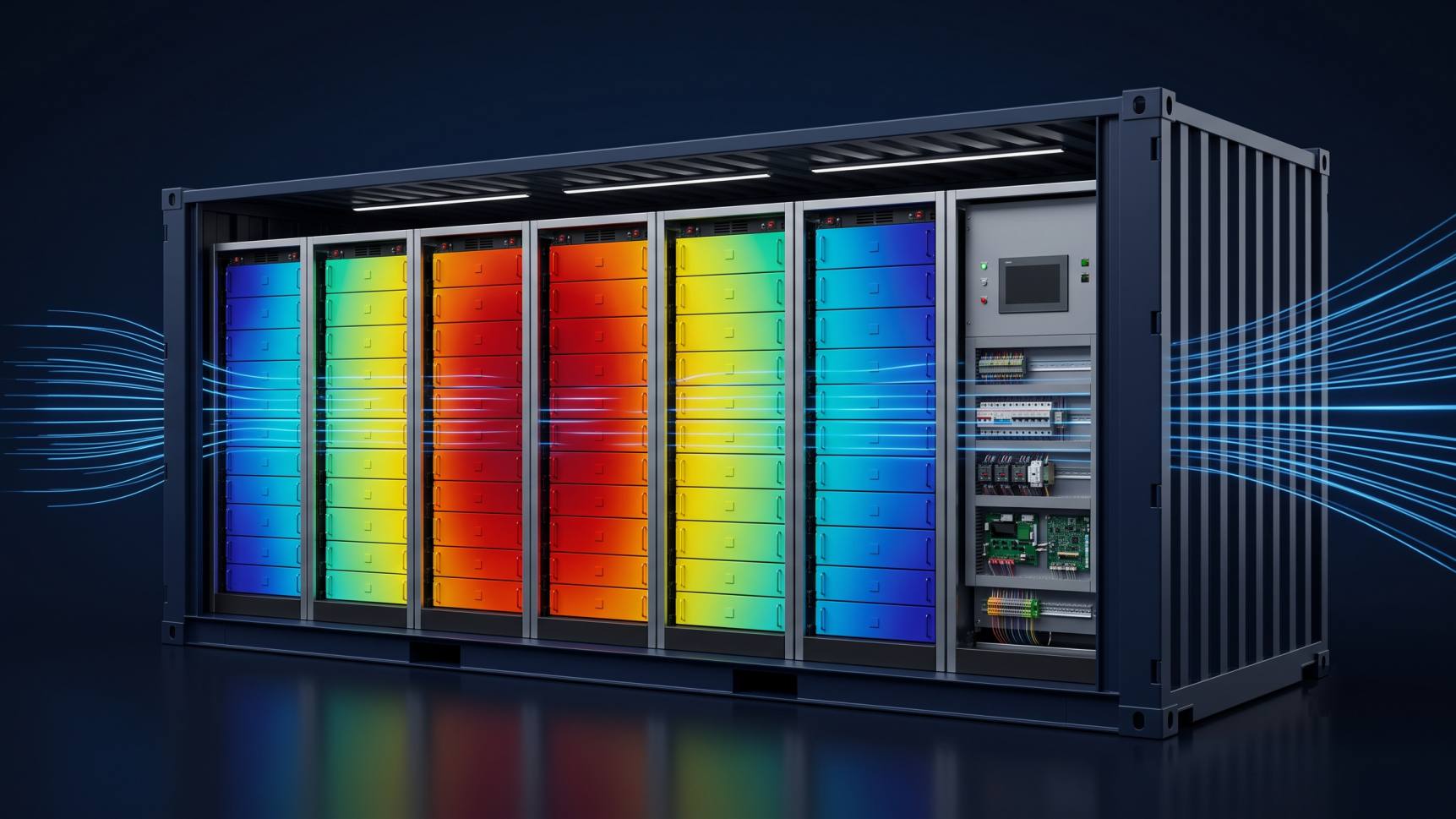
Digital-twin container on dark ground, module faces hottest at the centre bays, switchgear cabinet at the right end.
Temp
(°C)
  1. Initiation
  2. Propagation
  3. Peak
  4. Decay

Predict. Analyze. Design

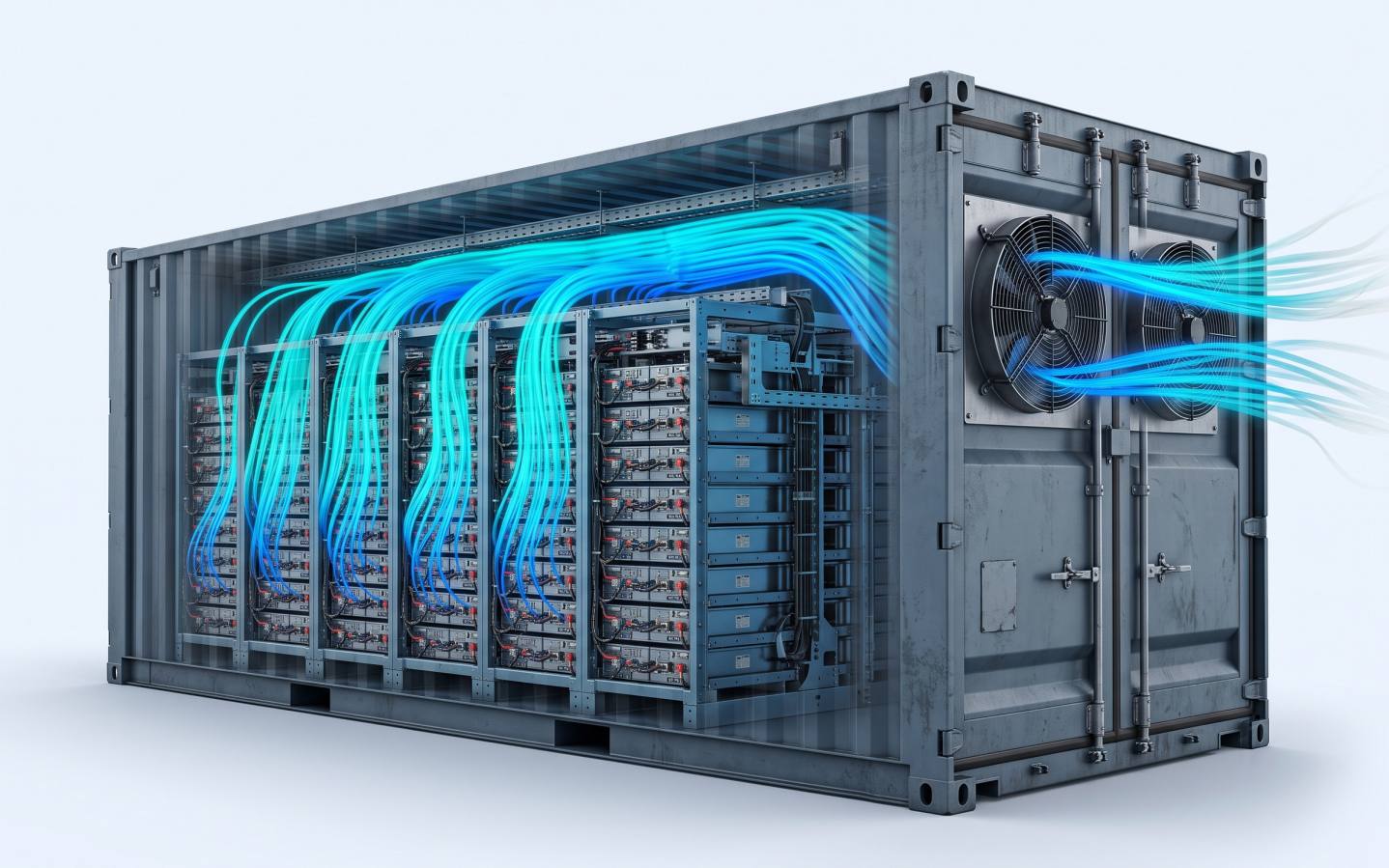
Container cutaway, cyan gas streamlines drawn along the racks and out through two circular exhaust fans at the right end.

Gas & Ventilation

Evaluate gas release, dispersion, and ventilation effectiveness.
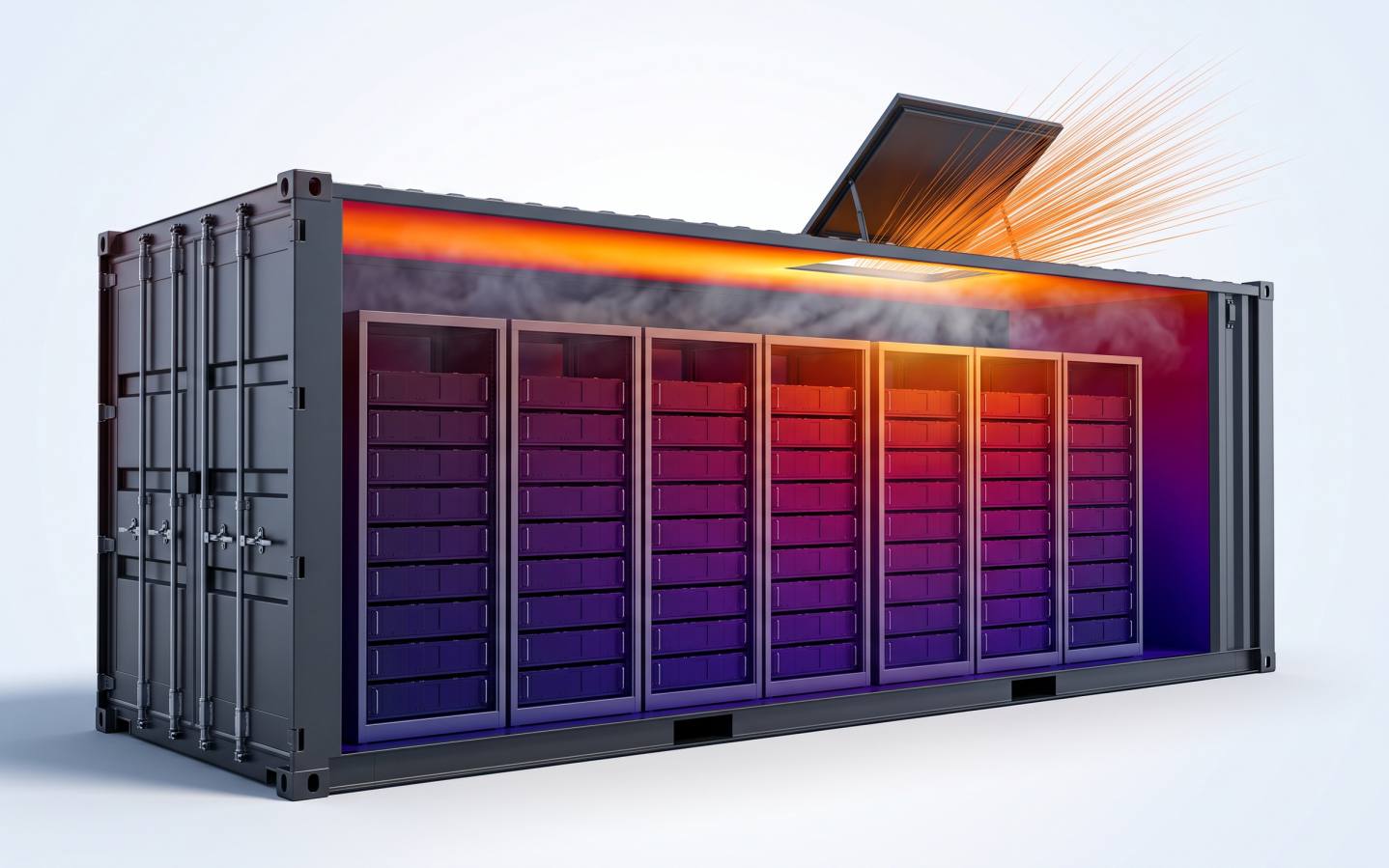
Container with a roof vent panel blown open, orange pressure release above, the field cooling downward to deep indigo.

Pressure & Explosion Risk

Assess pressure rise, deflagration risk, and enclosure response.
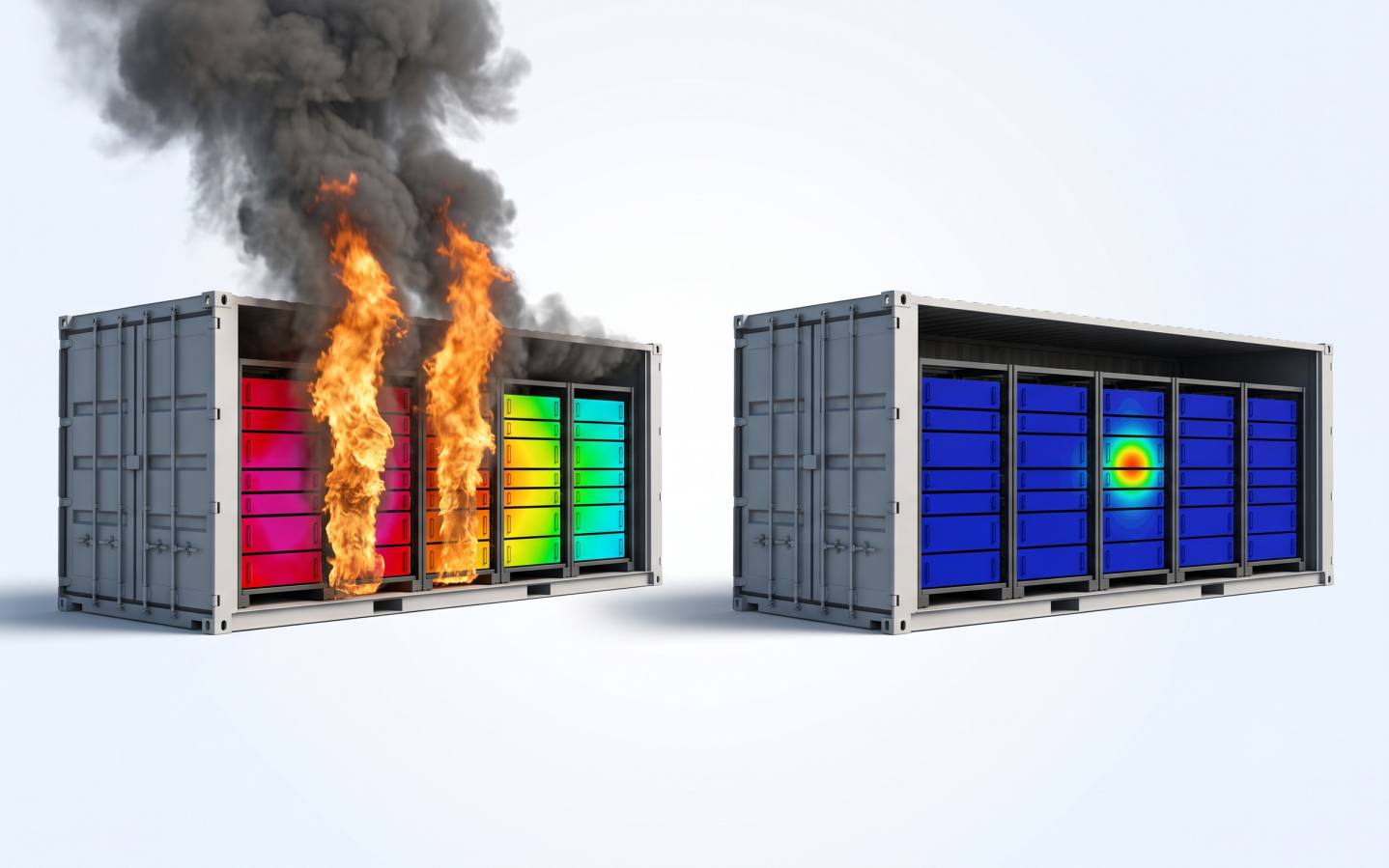
Two identical containers compared: fire and a full-width heat rainbow on the left, one small warm patch on the right.
BEFORE MITIGATION AFTER MITIGATION

Mitigation Design

Compare barriers, spacing, ventilation, and suppression strategies before implementing in hardware.
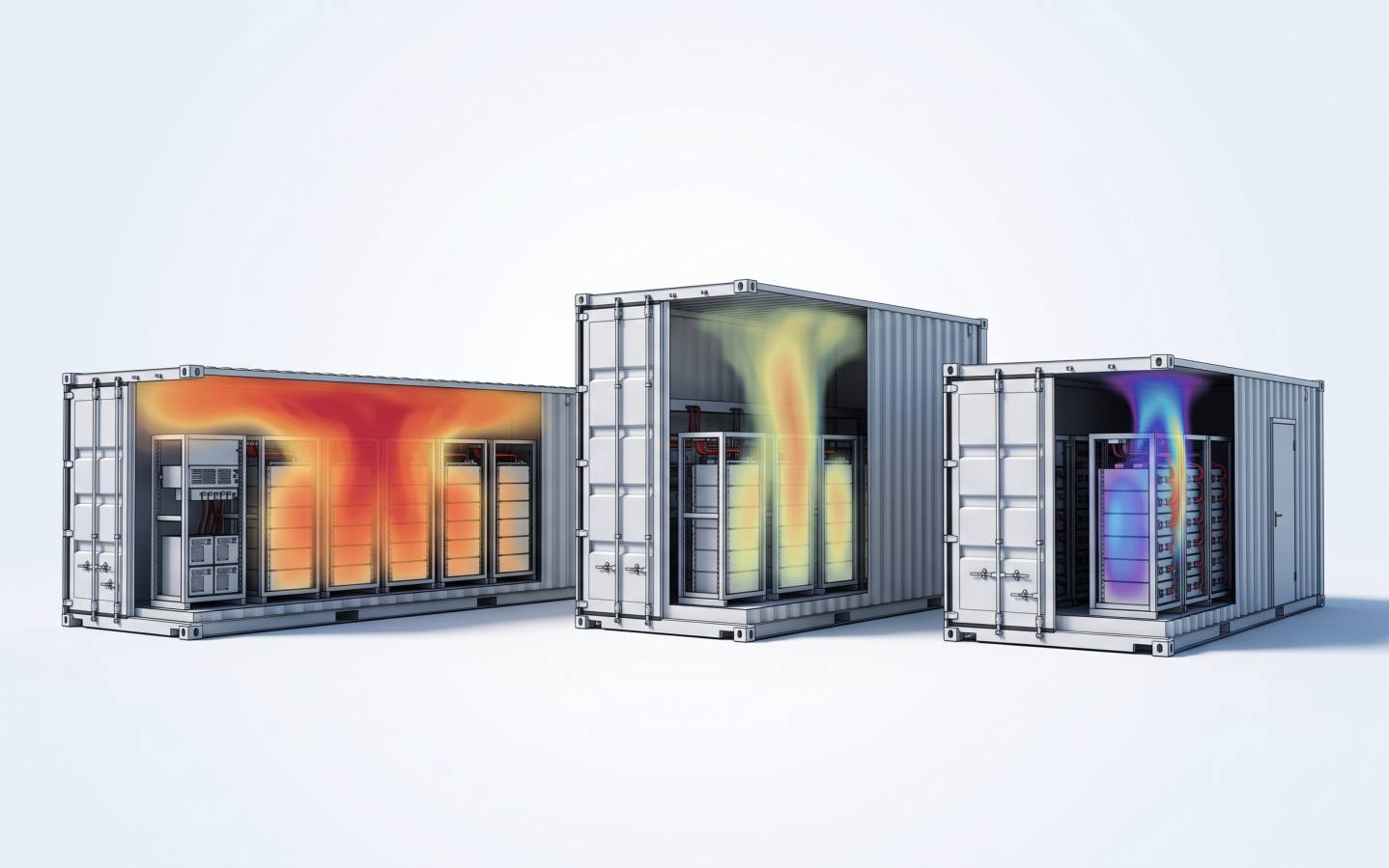
Three different container designs side by side, their hot plume shrinking from a wide red sheet to a tight blue core.
DESIGN A DESIGN B DESIGN C

Design Exploration

Evaluate alternative cell chemistries, layouts, and operating scenarios.

Built on Physics.
Validated with Test Data.

Digital twin predictions are evaluated against test measurements across cell, module, and system levels, learning across scales to capture thermal cascade, gas dispersion, and plume dynamics.

  • Cell Level
  • Module Level
  • System Level
3000 2000 1000 0 HEAT RELEASE RATE (kW) 0 15 30 45 60 TIME (min) Test Data Simulation

Where are you in the test process?

Preparing for a Test

Evaluate system-level thermal runaway behavior, design configurations, and mitigation strategies.

Plan a Test Campaign

Completed a Test

Understand test results through a high-fidelity replay and evaluate design improvements with the digital twin.

Analyze Test Results