BASELINE DESIGN
Current site configuration under the selected scenario
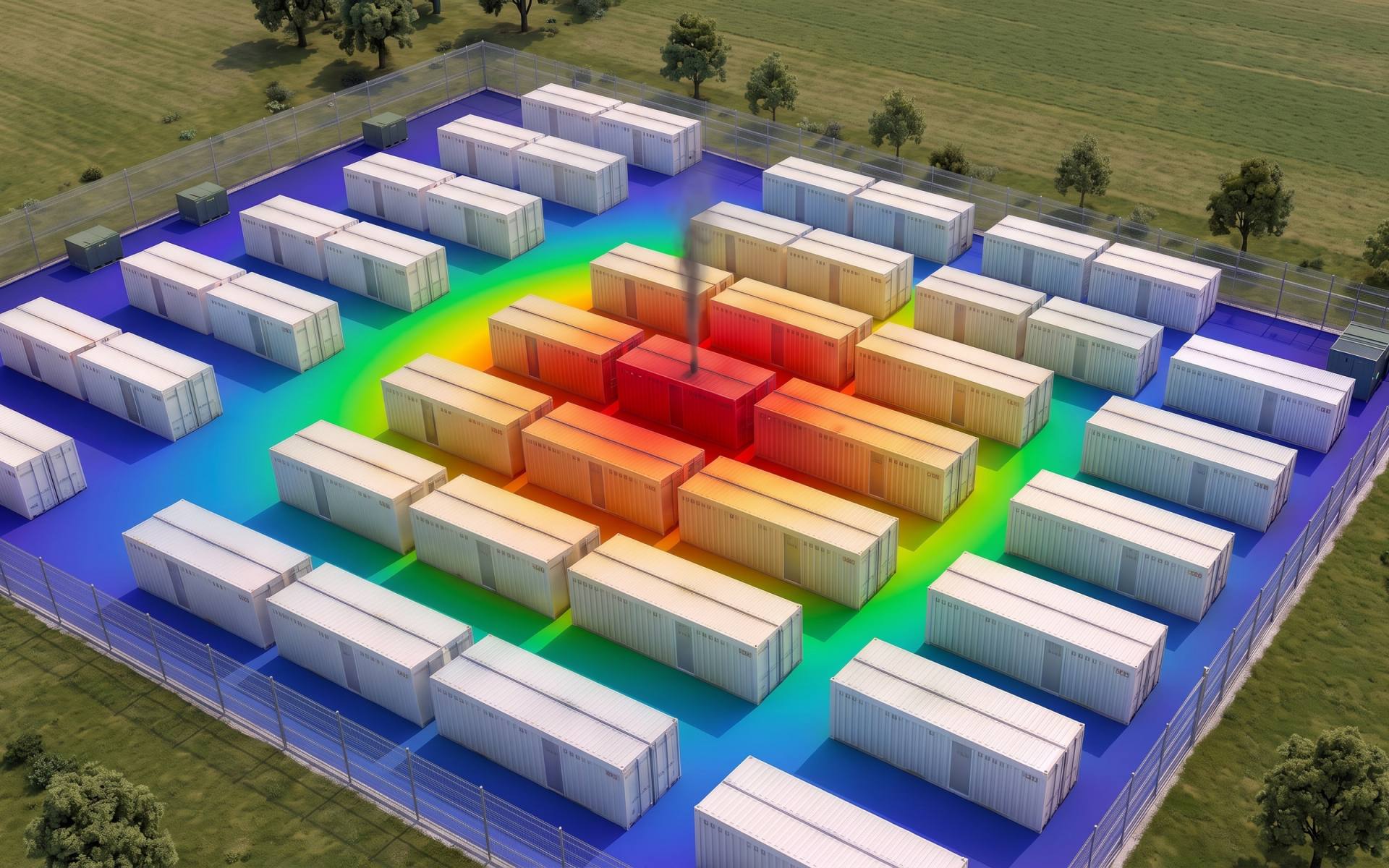
-
Peak heat flux
28.4 kW/m²
-
Exposed containers
11
-
Infrastructure exposure
Moderate
ENERGY STORAGE SITES
Analyze site layouts, separation distances, surrounding exposures, and mitigation strategies for safer energy storage deployment.
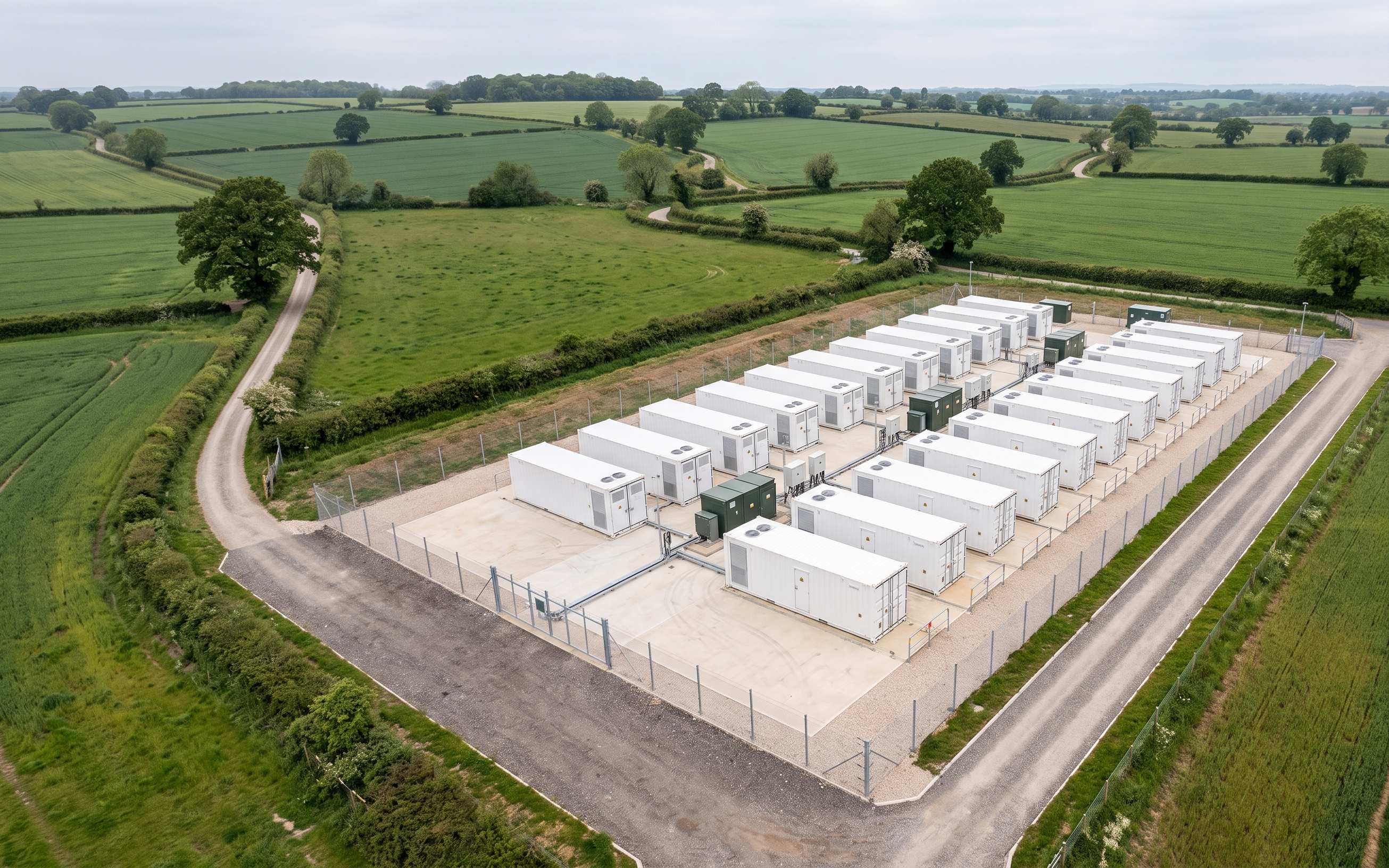
Large-scale fire testing characterizes energy storage system safety under controlled conditions. At a deployment site, spacing, neighboring systems, buildings, site boundaries, wind, and surrounding infrastructure create conditions that differ from the test environment. These factors can significantly change how thermal runaway and fire events develop, propagate, and affect neighboring systems and infrastructure.
EXPLORE THE DESIGN SPACE
Evaluate layouts, spacing, barriers, and mitigation strategies to determine how site
configurations impact
safety outcomes.
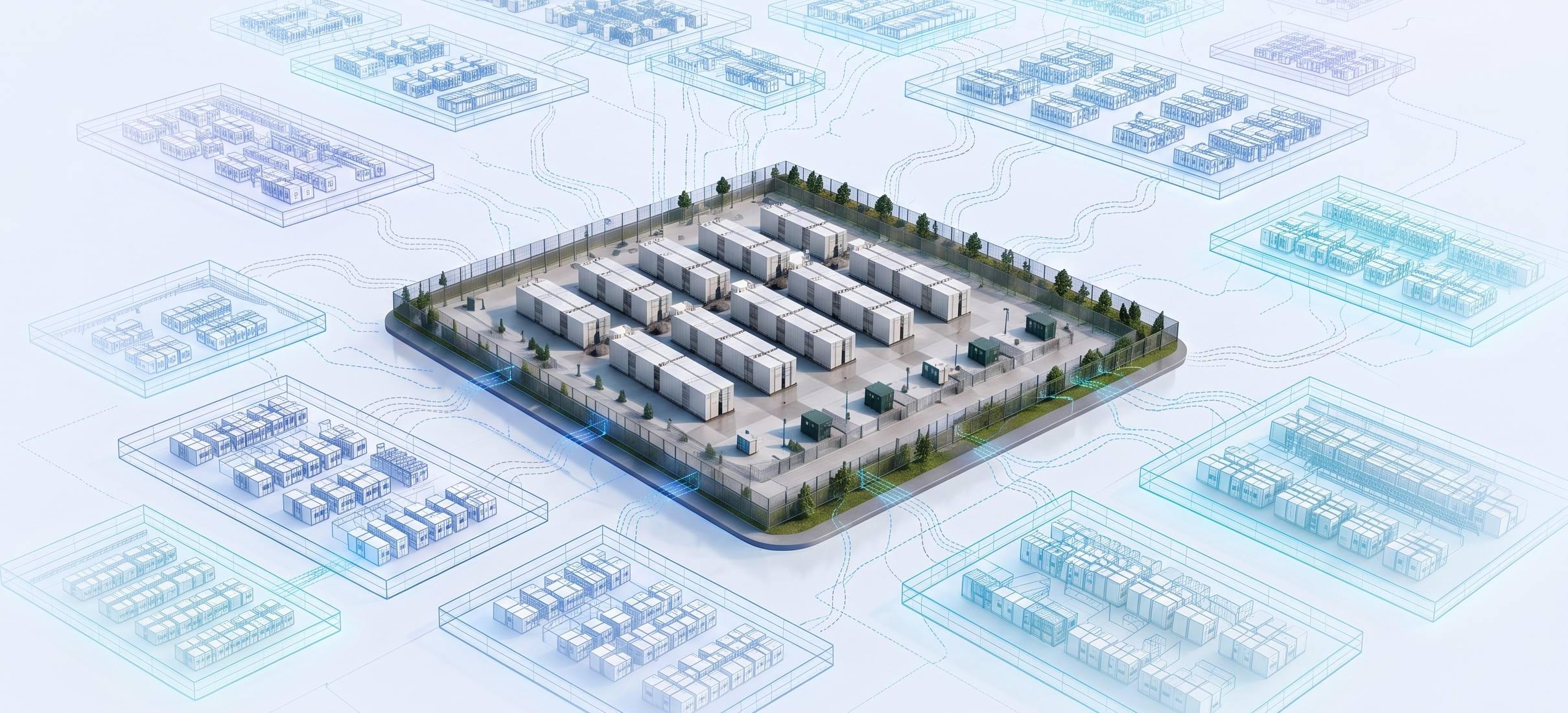
DESIGN COMPARISON
Screen site configurations across design variables and environmental conditions to
quantify heat flux,
exposure, and propagation.
BASELINE DESIGN
Current site configuration under the selected scenario
Peak heat flux
28.4 kW/m²
Exposed containers
11
Infrastructure exposure
Moderate
DESIGN VARIABLES
Explore how design choices and site conditions impact safety outcomes.
ENVIRONMENTAL CONDITIONS
Evaluate performance under changing site conditions.
ALTERNATIVE DESIGN
Modified site configuration with reduced exposure and risk
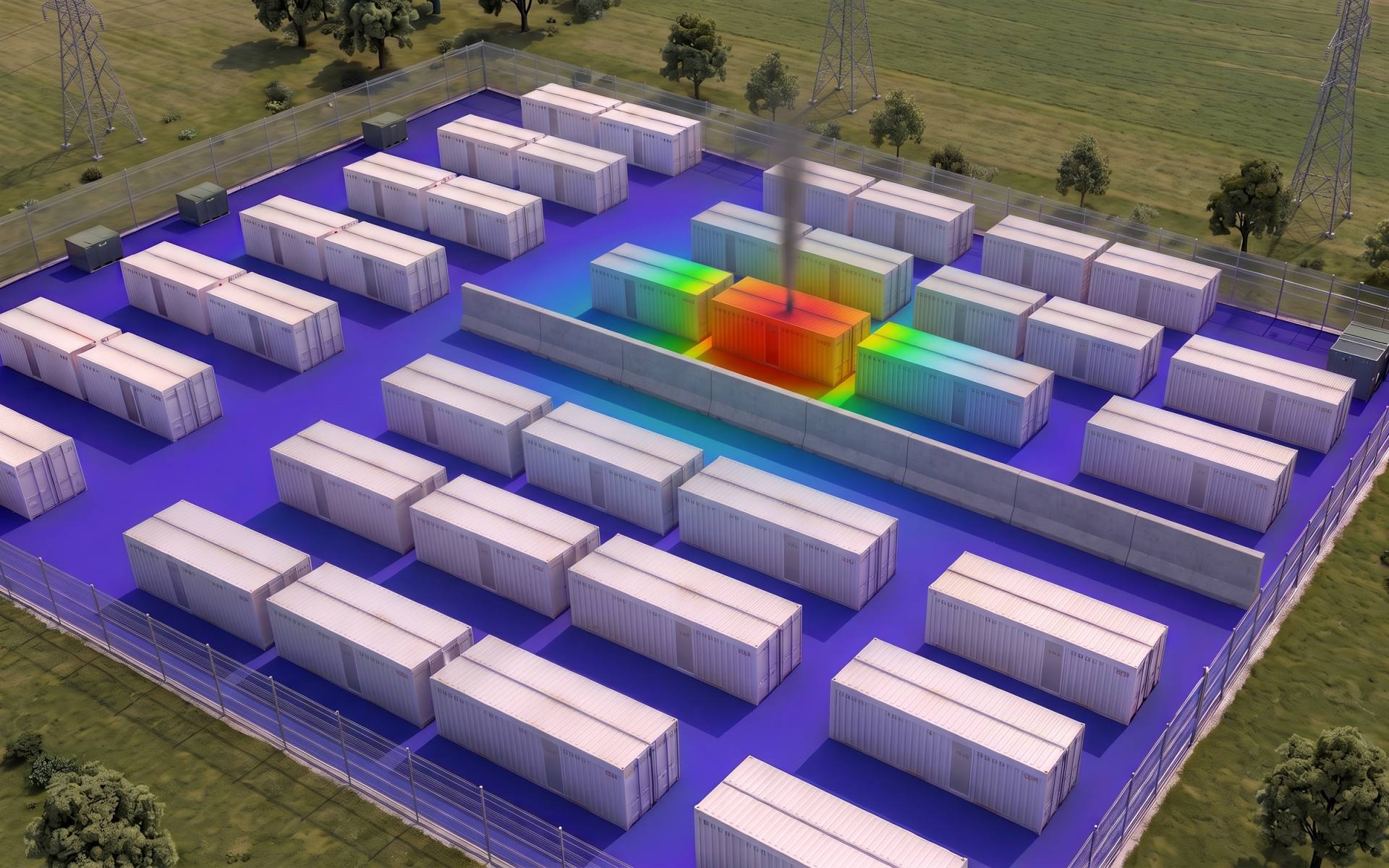
Peak heat flux
4.2 kW/m²
Exposed containers
2
Infrastructure exposure
Low
Evaluate. Compare. Design.